
Fauci Took the Fifth More Than 100 Times.
Lost my grandparents during COVID, and watching him refuse accountability brought it all back up.
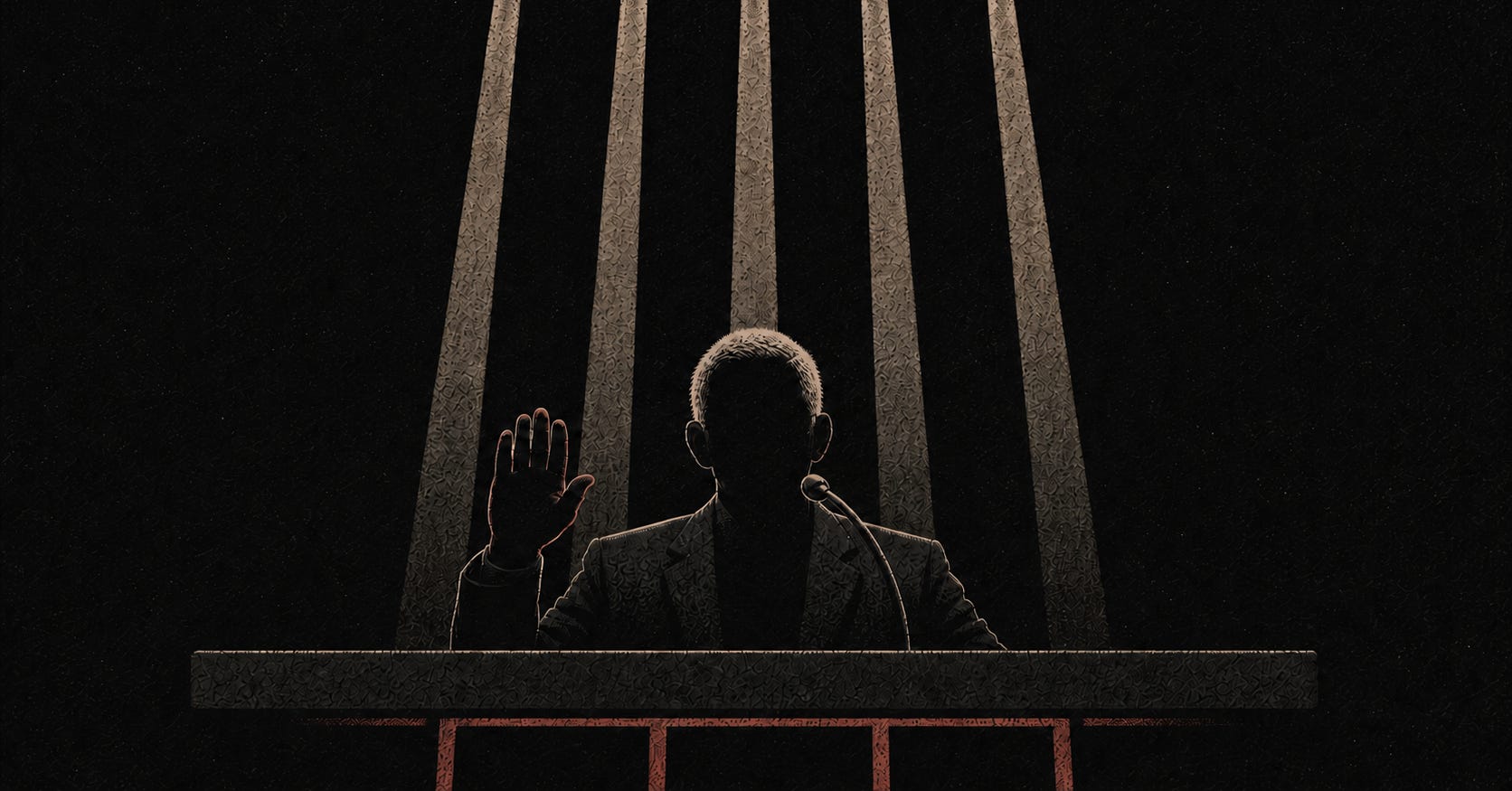
Fauci’s remdesivir protocol killed my last three grandparents. I begged my folks to intervene. But they trusted the “experts”.
On Wednesday Fauci was in front of the Senate, under subpoena and sitting on a preemptive pardon. He still plead the Fifth more than a hundred times.
I don’t know why that got to me. But I kept thinking about my grandparents.
Because I never asked what an average day looked like when they were 15, or 30. I never asked when they first caught an institution lying to their faces, or what they understood at 80 that they would have argued with at 40.
We always figure we have more time.
Far Country came out this week, and there was a chapter in it I want to share with you. Yeshua is a young man boarding with a potter in Carthage.
This is the whole chapter.
THE WORST CUP IN THE HOUSE
The water went out of the cup onto the roots of the fig tree, the same as it went every morning.
She poured it slow, both hands, the care of a person who does not want to spill, though it was only yesterday’s water and the dry ground would take it and say nothing. Then she dried the cup on the hem of her sleeve, inside and out, and carried it back through the dark house and set it on the shelf above the wheel, in the one place on that shelf she kept clear of dust.
The cup was small, the size of a child’s two hands. It sat crooked. The rim ran downhill on one side, and near the foot a thumb had once dragged a groove in the wet clay and the groove had been fired in and kept. It was the worst cup in the house. Every other vessel under that roof she had made, and they were the work of a woman who had thrown pots in Carthage for forty years, thin and even and true. This one she had not made. This one had been made by a pair of hands still learning, and the hands had not gone on to learn, and so the cup was the best work those hands would ever do, and it was bad, and it was the only thing on the shelf she would have run into a burning house for.
She washed her hands in the basin and her hands did not come clean. They had not come clean in forty years. The red of the clay had gone up into the creases and stayed, to the wrist, and her hands wore the look of fresh blood that no washing took out.
The harbor went from gray to white. She sat down at the wheel.
Asok took the rooms because they were clean and the price was fair and the woman who kept them did not talk.
She gave them the upper floor and the run of the courtyard and a key, and told them the well was good and the bread two streets east was not, and that was near the most she said in a day. She was broad and carried her weight low, and she moved through the house setting each foot down as though the floor were owed something. When she lifted a thing she lifted it with her whole back. When she set it down it made no sound.
Vidar found the wheel the first morning and could not be got away from it.
She let him watch. She took a fist of clay and centered it with the heel of her hand, and the lump that had lain there stupid stood up and ran true, and a cup climbed out of it under her thumbs, the easy rising of a thing that is only being reminded to be what it already was. She made six that morning and stood them on the board to leather. The sixth had a waver in the rim, a fault no one but a potter would ever find, and she looked at it a moment, and then took it in her two stained hands and closed them, and the cup folded back into a fist of clay, and she dropped it in the bucket where the spoiled clay went, and pulled the next.
“Why did she do that,” Vidar said. “It was a good cup.”
“It was not good enough.” Yeshua had been in the courtyard door a while. “She knows the difference between good and good enough. We would not. That is the whole of her trade, the knowing, and it costs her a cup a morning to keep it.”
He watched her work on the days after, as he watched anyone whose hands knew a thing his did not.
She worked in clay and he had worked in wood his whole life, and the two trades do not touch, except in the one place where every trade is the same, which is the hands, and the quiet that comes into a maker’s hands while the rest of the maker goes off somewhere to listen. He knew that quiet. He had it at the bench. He watched her have it at the wheel, and once, when a jar she was closing went thin on one side and she felt it through her thumbs before it showed anywhere a man could have seen it, he watched her save it with a pressure so small it had no name, and a low sound came out of him before he could keep it in. She did not look up. But the line of her shoulders changed for a moment, and settled, a body that knew it was no longer working alone.
They did not talk. There was nothing he could tell her about clay and nothing she wanted said, and it was the best company there is, the company that asks for nothing, and they kept it three days on fewer than a dozen words.
There was a daughter. She came in the afternoons with a child on her hip and bread and oil, and a way of glancing at the cup on the shelf and then away from it that told the whole thing before she opened her mouth.
She said some of it to Asok in the courtyard, low, while the carpenter was up on the roof out of the heat and could not hear.
“It is his cup. She fills it for him every night and pours it out every morning, when the night has gone by and he has not come.” The daughter shifted the child to her other hip and did not once look at the shelf while she spoke of it. “Every day. I have asked her to stop. The priest asked her. The year I married I took it down and put it in a chest, to make her live again, and that night she went through the whole house in the dark, room to room, not calling out, only looking, and I gave it back before the morning and we have not touched it since.” She bounced the child without knowing she did it. “You will see it tonight at the table. I am telling you so that you will not say anything. People say something. They cannot help themselves. They believe there is a thing to say that has not been said to her yet, in eleven years, and there is not.”
“No,” Asok said. “There is not.”
The daughter looked at him with the small surprise the grieving keep for anyone who does not reach for the bandage.
“No,” she said. “There is not.”
They ate in the courtyard at dusk, because the day’s heat came out of the walls after dark and the courtyard was the cool place.
She cooked for them and would take nothing more for it. She laid the table with her own even cups, one at each place, true and thin. Then she went to the shelf and took down the crooked one, and filled it from the jar, and set it at the head of the table where there was no stool, and sat, and broke the bread.
Nobody looked at the cup. Vidar had been told and Asok had been told and they ate with their eyes kept carefully level, and the lamp drew the moths, and Asok said a small thing about Alexandria and the woman almost smiled.
When the jar came round to Yeshua he filled his own cup.
Then he reached across the table to the crooked cup that already stood full, and he poured into it until the water stood up brimming at the rim and would have spilled at a breath, and he set the jar down, and went back to his bread.
The courtyard went still.
She looked at the cup. The water trembled at the lip of it and did not fall. She looked at the man who had filled it, and she waited, because she knew the shape of what came next, she had heard every version of it for eleven years. He is at peace now. It has been long enough. You must let yourself live. She sat with her stained hands flat on the table on either side of the brimming cup and she waited for the kindness that was about to be done to her.
It did not come.
The carpenter ate his bread. The lamp burned. The moths came and went. The water stood at the rim of the crooked cup and slowly went still, and nobody filled the silence, because the one man at the table who might have filled it had decided not to, and the others followed him into the not-filling.
“You did not ask who it is for,” she said at last.
“No.”
“Everyone asks. Or they have stopped asking, which is the louder question of the two.”
“It is not mine to ask.”
She turned the crooked cup a quarter turn on the wood, so the dragged groove faced her, the place the learning thumb had been.
“They tell me he is not coming back,” she said.
He did not soften it. He had sat at a wheel three days watching her keep a thing the whole world told her to put down, and he would not be the next voice to tell her.
“No,” he said. “He is not.”
Her breath went out of her, all of it, the slow full emptying of a body that has held a thing so long it has forgotten it was holding anything at all. She did not weep. She breathed out, and then she breathed in, and the breath she drew in was the first whole one she had taken at that table in a long time.
“But you filled his cup,” she said.
“Yes.”
She did not ask why. She tore a piece of bread from the round and set it on the board beside the crooked cup, a place set for someone only late.
They left three days after, west along the coast where the grain road ran.
The morning they went she was at the wheel before the light, the same as every morning, because the clay comes up when the clay is ready and does not wait on anyone’s leaving. She did not come out to the gate. It was the hour.
Vidar looked back once from the lane. Through the courtyard door he could see her broad bent back and her two stained hands bringing a cup up out of the clay under her thumbs, thin and even and true, a cup she would cut from the wheel and leather and fire and sell to a stranger who would drink from it for years and never once wonder whose hands had made it. He watched a moment. Then he walked on beside the teacher with his book against his chest, and somewhere down the lane he stopped to write her down. He ruled the page and set down the wheel, the red hands, the fig tree. Then he came to the cup, and the pen stopped. There was no word for the cup. He tried one and struck it out, because a word for the cup would have to be a word for what the cup was for, and he did not have that word in any tongue on any page he had filled. He left the line under it bare. He shut it and caught the teacher up, and they went on.
On the shelf above the wheel, in the one place kept clear of dust, the crooked cup stood empty in the early light, dry, waiting for the evening and the water that would fill it and the morning that would pour it out again.
She did not look up. The wheel kept turning.

An early reader lost her husband after three decades of marriage. She told me she read this chapter a few times to get it, and then she sent me this.
It evoked in me the memory of having lost my husband of nearly 30 years to death, and yet still feeling sometimes like he might still be in the house when I came home.
I can’t ask my grandparents anything now. It’s been six years and they’re not coming back. You likely have been here longer than I have, so I’m asking you.
Leave a note below and tell me one thing about the life you grew up in that a younger person would struggle to imagine today. If you’d rather not put it out in public, reply to this email instead. I might write back and ask if we can talk more. Anything you send me privately stays private unless you say otherwise.
If you’re carrying a name from COVID, you can leave just the name. That’s OK.
<3EKO
This is a chapter from book 2 of The Nazarene. The Gospels are silent from the Temple at twelve to the Jordan at thirty. Far Country walks those years.

Read for free: Far Country is here as a PDF and EPUB. And listen on Youtube:
Want to begin at the beginning? Son of Man is now forever 99 cents on Kindle.

Thanks for reading and writing.
I love you.
I am Canadian but my wife is Texan so we split out time between two countries; winter in Texas is more forgiving than Canada and summer in Canada likewise.
So when I got word of my father's sudden and unexpected death of a ruptured aneurysm in his abdominal aorta in Canada on January 1st 2021, I was two time zones away, just before midnight on December 31st 2020 in Texas.
When I prepared to fly back to Canada, the airlines cautioned me that some provinces (including mine) were barring incoming passengers. I called and I was denied entry. My elderly mother has three sisters still alive; they were denied entry as well.
The memory of watching the video feed of Dad's funeral with everyone uselessly "social distancing" wearing masks still makes me angry and sorrowful. And it appears no-one will ever be held accountable for turning the world upside-down over a bad flu.
1973. Driving my yellow VW beetle, stick shift, no seat belts, regularly down-shifting to slow down and up-shifting (is that a word?) to accellerate, and nursing my brand new baby all at the same time.