JFK Jr.’s Dinner with the Gate Keeper
A parable about what the machine offers when it can’t kill you.
You know how Kennedy died. Nobody told you what they offered to his son.
He locked the bike to a parking meter on Fifty-Fourth Street and walked south. July. The kind of heat that sat on the city like a hand. He was wearing a jacket because where he was going required one, and he carried nothing else.
The door had no sign. Brass number above the frame.
A man in a coat opened it before he knocked.
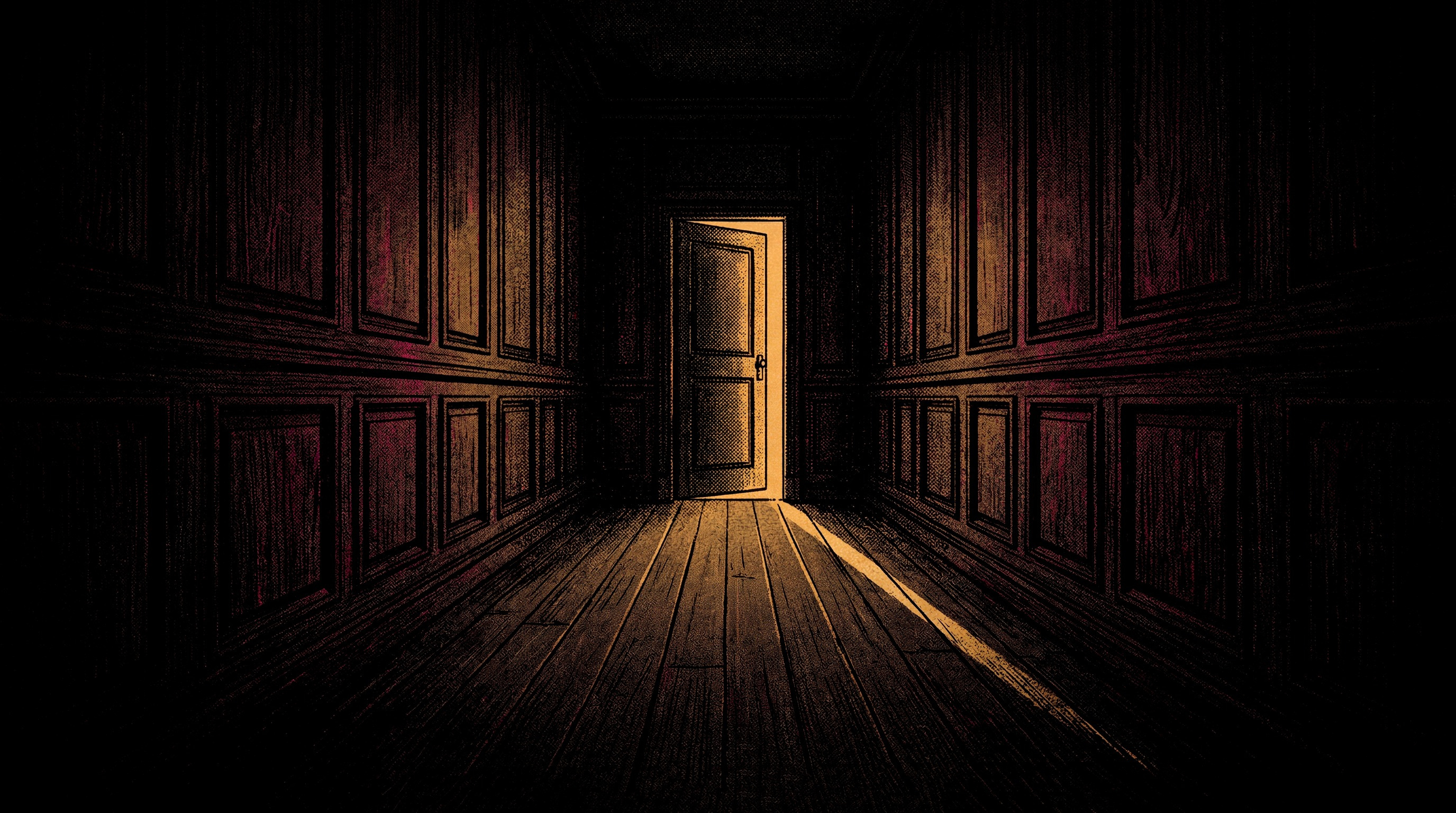
The room was set for one. White tablecloth. Silver. Candles already burning. One plate. One glass. One chair pulled out.
Across the table: a second chair. No plate. No glass.
The man sitting in it had not eaten in decades.
“If I wanted you dead, Mr. Kennedy, you would not have made it to the table.”
John sat. He moved the salad fork a quarter inch. Put it back. A man deciding whether his hands should be busy or still.
“My mother had a pink suit. She wore it to Dallas because the sun was bright and she thought it would photograph well from the street. She wore it for eighteen hours afterward. On the plane. At the swearing-in. She refused to change. Someone told her to change and she said no. Let them see what they did.”
“I know about the suit,” the Gate Keeper said.
“I am the son of the man you killed.”
“You are the son of a yield event the arrangement determined had exceeded its value to the program. The distinction matters.”
“Dallas was maintenance,” he said. The way a man mentions a roof that needed patching. “Your uncle understood it better than your father. Bobby made himself useful. Then he stopped being useful. The curve is the same.”
John asked what the witnesses were for. The inconsistencies. The number of shooters nobody agreed on.
“The witnesses are part of the message. Fifteen contradictions means the public argues about the contradictions forever. They never arrive at the question underneath.”
The first course arrived. The Gate Keeper did not look at it. His fingers rested on the tablecloth and made adjustments so small they could have been involuntary. A man calibrating instruments only he could read.
“I consumed my last meal forty years ago. The body runs on a different fuel now.”
He said this the way someone mentions a change in commute.
“Harvest is boring,” the Gate Keeper said. “A yield event produces one pulse, one product, one cycle. The system processes it and waits for the next. Maintenance. Collection. Accounting. The dull business of the arrangement.”
He paused. Let the candles fill the silence.
“Recruitment is sport.”
John had been running a magazine. Writing pieces that circled the architecture without naming it. The Gate Keeper had read every one.
“The first tells me what you believe is safe to say. The second tells me what you believe is true. The distance between those two articles is where you actually live.”
He laid out the structure. Forty years of it. Dallas. The kitchen in Los Angeles. The committees, the commissions, the testimony that sealed itself. He explained it with the calm of a surgeon who has been explaining the same procedure for longer than his patient has been alive.
“Every man who sits at this table falls into one of three categories. Every man for forty years. Generals. Senators. Directors of agencies whose names you would recognize.”
“And you sorted them.”
“I showed them the architecture. They sorted themselves. The ambitious man asks how to climb. The frightened man asks how to hide. The righteous man asks how to fight. In forty years no one has asked a fourth question.”
John said nothing. The Gate Keeper waited.
“You built something small, private, entirely resistant to leverage,” the Gate Keeper said. “No bank accounts they care about. No political connections they need. No children in positions where they could be held. A man who sees the machinery clearly and still walks away. That was not a category the taxonomy was built to process.”
Then the Gate Keeper made his offer.
“Stop asking. Stop publishing. Marry your wife. Have children. Love them in the way that matters. Build the small things. Let the machinery turn without you in its gears.”
He paused. Let the image form.
“A house on the water. Children’s voices from the next room. Ordinary Wednesdays that stretch into ordinary years. You fall asleep on the couch during a movie your daughter chose. You stop asking the questions. The questions stop asking you.”
His voice had changed. Something older than pedagogy.
“That is a real life. I am offering you a real life.”
John looked at the man across the table. The man who had not touched food in forty years. Who had traded his own house on the water for position inside the arrangement. Who described his children the way a man describes a building he designed that someone else lives in.
The candles had burned to their final inch. The wax pooled on the silver holders in shapes neither man would remember.
John stood.
I wrote a book about that dinner.
Two men. One table. Twelve chapters. One evening. Some of the clues are real. Some of the names trace back. What he chose.
The Gate Keeper is available in paperback.
You may also grab the PDF directly from my site, as always.
Thank you for reading.


I notice the similarities between this entity not eating food for 40 years and the recent findings in the Epstein files concerning JE, the "jerky" and his assistant mentioning that JE was going to start eating real food again. We all grew up thinking the stories of monsters were fables...
Clearly, you are a captivating writer, one of the best! But, the question in the back of my mind is, how much is imaginative construct, and how much is factual?
I believe I have all your kindle books to date, because your writing style pulls the reader in, which I like. But how do you know about what you write?
Thank you, as always.