The Brother
He worked harder than his brother. He woke earlier. He stayed later. It did not close the gap.
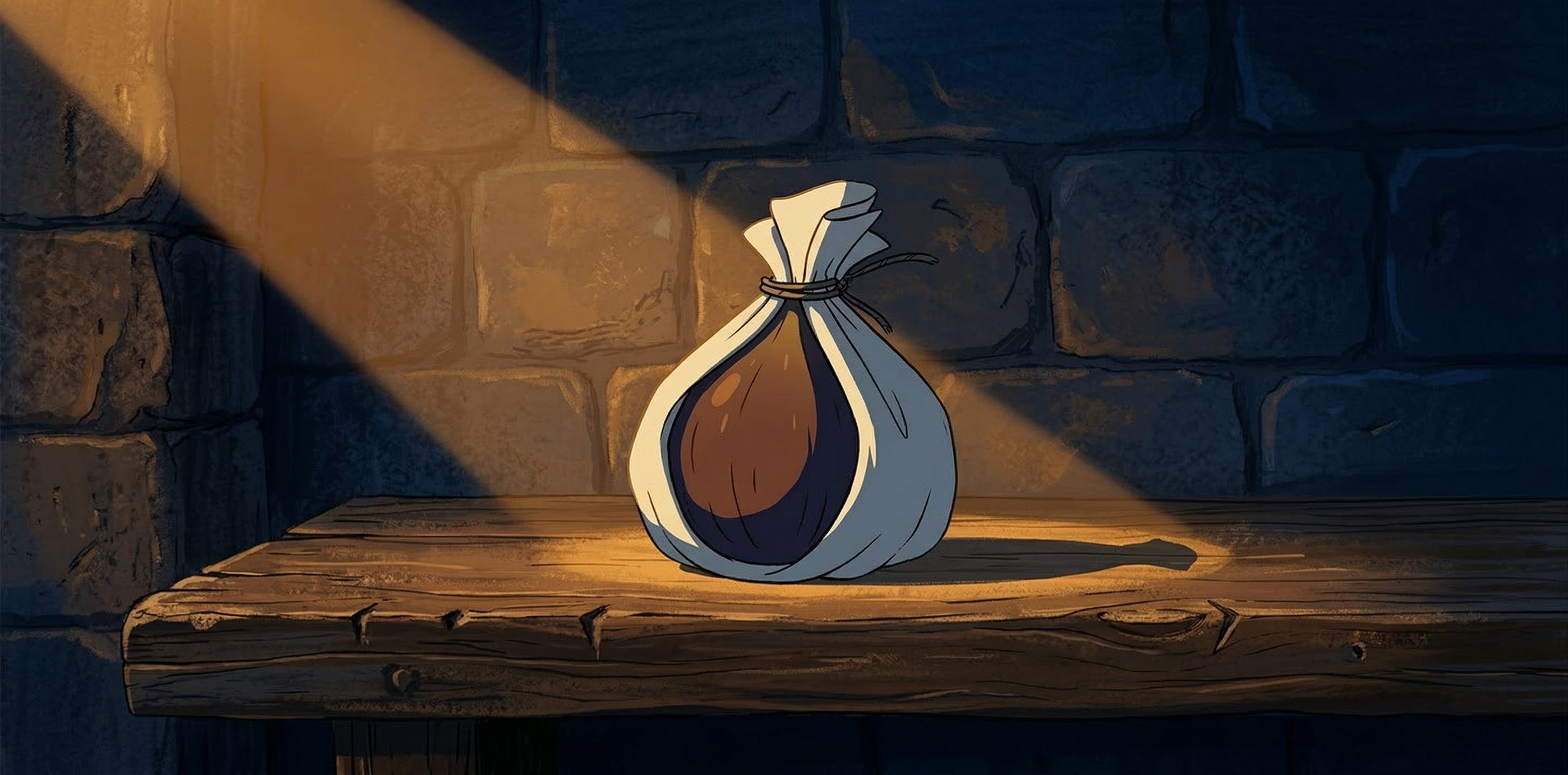
The argument started over a fig.
Miriam had saved one from the morning meal. Set it aside on the high shelf, wrapped in a cloth, because Simon had been sick all week and she wanted him to have something when he woke from his nap. She was eleven. She had been mothering the younger ones since before she could name what she was doing.
James found the fig. Ate it. Dropped the cloth on the floor.
The screaming could be heard from the workshop.
Yeshua set down his chisel. Joseph glanced up from his bench. The sound of Miriam’s fury rose through the walls, followed by Simon’s wail, followed by Joseph Jr. yelling something indistinct that ended with the word mine.
Joseph sighed. “Your turn or mine?”
“Mine.” Yeshua wiped his hands on his tunic. “You finished last time.”
He crossed the yard into the house. Miriam had James by the collar of his tunic. James was trying to get free without actually shoving her. Simon was crying in the corner. Martha was sitting on the bench eating an olive, watching the whole thing with the calm of someone who had seen this performance before and found it unremarkable.
“He ate Simon’s fig,” Miriam said. Her face was red. Her grip did not waver.
“I didn’t know it was Simon’s.”
“It was wrapped. On the high shelf. Who wraps a fig and puts it on the high shelf for no reason?”
“Someone who wants figs to go stale.”
“Enough.” Yeshua knelt beside Simon first. “You feeling better?”
Simon wiped his nose on his sleeve. “My fig.”
“I know.” Yeshua picked him up. The boy was light and warm and clung to his neck the way ivy clings to a wall. “I’ll find you another one after lunch.”
He looked at James. Twelve years old. Already taller than Miriam. Arms crossed. Eyes refusing to concede. Braced for a fight he had already decided was unfair.
“You knew it was for Simon.”
“I was hungry.”
“There was bread on the table.”
“I didn’t want bread.”
“Next time, ask.”
“Ask who? You?” The word carried weight. Not sarcasm. Something colder. A genuine question about hierarchy. Who runs this house. Who gets to decide who eats what.
Their father was thirty feet away in the workshop.
Yeshua said nothing. Set Simon down. Left the house.
The children of Joseph and Mary, in order:
Yeshua. Fourteen. The eldest. The one the neighbors watched and the siblings orbited and the parents could not fully explain, even to each other.
James. Twelve. Second-born. The one who should have been first if birth order were measured by desire. Everything Yeshua received without asking, James clawed toward. Attention. Authority. The right to be heard in a room. He was bright. Not brilliant the way Yeshua was brilliant, not the kind of brightness that made elders fall silent, but the solid brightness of a boy who worked hard and remembered what he was taught and could not understand why his older brother, who never tried, surpassed him at everything.
Miriam. Eleven. The one who ran things. While the boys debated and their parents worried, Miriam fed people. She tracked the oil. She knew which child had eaten and which was pretending. She could nurse a fever, mend a seam, and settle a fight between two brothers in the time it took Mary to cross the room. She did not ask for recognition. She did not need it. She had the house, and the house had her, and the arrangement suited them both.
Joseph Jr. Ten. Named for his father. Terrified of becoming him. A quiet boy with Joseph’s hands and Mary’s nerves who built things alone in the corner of the yard and flinched when voices rose. He carved small animals from scraps. He never showed them to anyone. Yeshua found one once, a bird with its wings half-open, and the precision of it stopped him. He put it back where he found it and said nothing.
Simon. Eight. Loud. Fearless. The one who ran into things face-first and then cried about it and then ran into them again. He loved everyone equally and without any sense of proportion. He would hug a stranger. He would hug a dog. He once hugged a goat and the goat bit him and he cried and then he hugged the goat again.
Martha. Nine. Born between Joseph Jr. and Simon. The observer. She sat at the edge of conversations and filed things. She remembered who said what and when and whether they meant it. She would repeat a phrase someone had said three weeks earlier with the precision of a court scribe and the timing of a woman twice her age. Mary found this unsettling. Yeshua found it magnificent.
Jude. Six. The youngest and the quietest. He followed Yeshua from room to room without speaking, watching everything, absorbing the household the way dry wood absorbs oil. He slept closest to the door. He flinched at loud voices. He had not yet learned that the world would not always be this hard.
Ruth had not been born yet. That was next year, and everything would be different then.
Joseph ran the household the way he ran the workshop. Quietly. Precisely. With a tolerance for imperfection that masked an absolute standard underneath.
He rose before anyone. He ate standing. He checked the ledger, the stores, the water, the weather. He knew which child needed shoes and which could wait another month. He knew that James needed to be told things once and Yeshua needed to be shown.
He assigned chores the way he assigned joints in a cabinet: each piece fitted to capacity.
James milked the cow. Miriam managed the kitchen. Yeshua split his hours between the workshop and the household. Joseph Jr. swept the shop. Simon and Martha had small tasks and large opinions about them.
The system worked because Joseph held it. Not through force. Through presence. He was the weight at the center of the table that kept everything from sliding off.
Yeshua saw this. He saw the cost of it too. The way Joseph’s shoulders settled lower each year. The way he ate less so the children ate more. The way he checked the ledger at night, alone, running numbers that never quite resolved.
He never complained. Never raised his voice. Never struck the children.
Once, when James had broken a tool through carelessness, Joseph picked up the pieces, laid them on the bench, and said: “Show me how you’re going to fix it.” Not punishment. Instruction. The boy who broke it was the boy who would learn from it.
James fixed the tool. It took him three days. When it was done he brought it to Joseph, who tested the repair and nodded once. James carried that nod for a month.
The problem between Yeshua and James had no name.
It was not jealousy, exactly. James did not want what Yeshua had. He wanted what Yeshua was. The effortlessness. The way answers assembled in Yeshua’s mouth before questions were fully asked. The way Joseph looked at him when he solved a problem, as if seeing something behind the solution that the solution itself could not explain.
James worked harder than Yeshua. This was verifiable. He woke earlier. He stayed later. He practiced his letters until his hand cramped. He memorized scripture with the grinding discipline of a boy who has discovered that talent is distributed unfairly and effort is the only variable he controls.
It did not close the gap.
At synagogue, the chazan asked a question about the prophets. James raised his hand. Gave a good answer. Correct. Thorough. The chazan nodded. Then he glanced at Yeshua, who was looking at the floor.
That glance. James caught it. The involuntary look toward the boy who hadn’t spoken, as if his silence were more interesting than James’s answer.
James said nothing on the walk home. He said nothing at dinner. He went to bed facing the wall.
Yeshua lay in the dark and listened to his brother breathe. He knew. He had always known.
They fought in the yard one afternoon in late spring.
A real fight. Physical. James threw the first punch because a neighbor boy had said your brother’s the smart one, right? and James had walked home with the sentence eating through him like acid through cloth, and when Yeshua asked him to move the water jars he heard it as an order and the order was the last thing.
James swung. Hit him in the jaw. Hard enough to turn his head.
Yeshua looked at him.
Not with anger. Not with surprise. With something worse. Recognition. As if he had been waiting for this moment, had seen it forming in his brother for months, and its arrival confirmed something he had hoped was wrong.
James hit him again. Yeshua caught his wrist.
“Stop.”
“Let go of me.”
“I will. When you stop.”
“You don’t get to tell me what to do.”
“James.”
“You’re not my father.”
The yard went quiet. Simon stopped running. Martha looked up from the ground where she was drawing patterns in the dirt. Jude pressed himself against the doorframe.
Yeshua released his brother’s wrist.
James stood there, breathing hard, fists still clenched, eyes wet with something that was not tears because James did not cry, had not cried since he was six, had made a private decision about crying that he intended to keep for the rest of his life.
“No,” Yeshua said. “I’m not your father.”
He walked back into the workshop. Picked up the plane. Started working.
James stood in the yard for a long time. Martha went back to her drawing. Simon started running again.
Joseph found out. Of course he did.
He sat with James that evening behind the workshop. The same flat stone where he’d sat with Yeshua after the Temple. The place where difficult things were said in the dark because the dark was kinder than lamplight.
Yeshua could hear them through the wall. Not the words. The cadence. Joseph’s voice low and steady. James’s higher, cracking once, recovering.
He did not go closer. He did not need to. He knew what Joseph would say because Joseph always said the same thing, in different forms, calibrated to the child.
Tell me what happened. Now tell me the part you left out. Now tell me what you’re actually angry about.
The last one was the hard one. James would circle the water jars, the neighbor boy, the order he didn’t want to follow. Joseph would let him circle. He would not push past the surface because he understood that a twelve-year-old boy who sleeps three feet from his brother and cannot close the distance between them needs to be held, not exposed.
James would talk about the water jars. Joseph would fix the water jars. And underneath the fix, the real thing would sit untouched between them, held in Joseph’s hands without being named.
Miriam cornered Yeshua three days later at the well.
“James isn’t speaking to you.”
“I noticed.”
“He thinks you think you’re better than him.”
“I don’t.”
“I know you don’t. He doesn’t know that. Because you never tell him anything.” She drew the water. Her arms were strong for eleven. “You never tell any of us anything. You walk around carrying whatever you carry and you never set it down and we watch you and we worry and you don’t notice.”
“I notice.”
“Then act like it.”
She carried the water inside. He stood at the well with the rope still in his hands.
That evening he found James in the yard, whittling a stick with Joseph’s knife. The blade was too big for his hand. He gripped it the way small boys grip big tools: with determination instead of skill.
Yeshua sat down beside him. Not close. Not far. The distance of a brother, not an authority.
“What are you making?”
“Nothing.” A long curl of wood fell to the ground. “A spear.”
“For who?”
“Me.”
Silence. The sound of the blade on wood. The evening insects starting up.
“The neighbor boy is an idiot,” Yeshua said.
James’s hand paused. “What?”
“The one who said what he said. He doesn’t know anything about either of us.”
James went back to whittling. The blade moved. He said nothing.
“Easy for you to say.”
“It’s not, actually.”
James looked at him. The look lasted three seconds. Neither blinked. James’s breathing slowed. His grip on the knife loosened half an inch.
He went back to the spear.
“It’s going to be crooked if you keep cutting against the grain.”
“I know.”
“Want me to show you?”
A pause. The blade stopped.
“Fine.”
Yeshua took the stick. Rotated it. Showed James where the grain ran, how the wood wanted to be cut, where to let the knife follow and where to resist.
“Abba showed me on my first day in the shop.”
“He hasn’t shown me anything.”
“He will. Ask him.”
James took the stick back. Cut along the grain this time. The curl fell clean.
Neither of them said anything else. They sat in the yard while the light died and the stars came and Joseph’s voice carried from the workshop where he was teaching Joseph Jr. to sand a plank, and the house held all of them in its ordinary gravity, and for one evening the gap between the brothers was narrow enough to sit beside.
Summer. The heat pressing down like a hand.
Yeshua came home from the workshop to find Martha alone in the kitchen, standing on a stool, stirring a pot that was too big for her.
“Where’s Miriam?”
“She went to help the neighbor with her baby. She said stir this.”
“How long ago?”
“A while.”
He looked in the pot. Lentils. Burned at the bottom. Martha had been stirring the top layer faithfully while the bottom turned to char.
“Martha.”
“I know. I can smell it.”
He lifted her off the stool. Set her on the bench. Scraped the pot, salvaged what he could, added water.
“She told me not to stop stirring. I didn’t stop.”
“You did great.”
“The bottom burned.”
“The bottom always burns if you don’t scrape. That’s not your fault. Miriam should have told you to scrape.”
Martha considered this. Her face, nine years old and already lawyerly, processing the distinction between instruction followed and instruction incomplete.
“Next time I’ll scrape.”
“Next time you’ll scrape.”
She ate her lentils without complaint. The charred ones too.
Late at night, the house asleep.
Mary sat with Joseph in the front room. The lamp burned low. They spoke in voices meant to travel no further than each other.
Yeshua was supposed to be asleep. He was not. He lay on his mat and listened. Not because he was spying. Because the house was small and their voices carried and he could not turn off the listening any more than he could turn off the thing that hummed behind his ribs at night when the house was quiet.
“James hit him,” Mary said.
“I know.”
“What did you say to him?”
“What I could.”
“It’s getting worse.”
“It’s getting harder. That’s different.”
“Joseph.”
“He’s twelve. He’s competing with a brother who...” Joseph stopped. Started again. “He’s competing with something he can’t outwork. That’s a cruel position for a boy who believes in effort.”
“What do we do?”
“We love them both. We give James his own space. His own work. Things he can be best at without the comparison.”
“And Yeshua?”
Joseph was quiet for a long time.
“Yeshua carries something I don’t understand. I’ve stopped trying to understand it. I just try to give him room.”
“Room isn’t enough. He needs...”
“What?”
Mary didn’t answer. Because the answer was: he needs a world big enough. And Nazareth was not that world. And both of them knew it and neither of them could give it to him.
“Jerusalem,” she said. “The school.”
“I’m saving for it.”
“How much?”
He told her the number. She was quiet.
“That’s years.”
“I know.”
“He’ll be grown by then.”
Joseph rubbed his face. His hands were rough from the work. “The best I can do is keep the family together until he’s ready. Whatever ready means.”
“And if ready means leaving?”
The lamp flickered. A moth hit the flame and fell away.
“Then we let him go.”
He lay in the dark after they stopped talking.
Seven people in this house. Each one a world needing something specific from him, from their parents, from the household that held them.
James needed room to be first at something. Miriam needed to be seen for what she gave. Joseph Jr. needed to know the quiet was safe. Simon needed everything, loudly. Martha needed to be taken seriously. Jude needed milk at three in the morning.
He turned on his mat. Pulled the blanket up.
He breathed with it. Not fighting it. Not feeding it. Just letting it be what it was in a house that was too small for it and a family that was too dear to leave.
Tomorrow James would not look at him at breakfast. Miriam would assign chores without being asked. Martha would remember something someone said last week and deploy it at the worst possible moment. Simon would hug someone who did not want to be hugged. Joseph Jr. would carve something beautiful and hide it.
He closed his eyes.
The house breathed around him.
Seven rhythms.
<3EKO
The Nazarene Saga drops a new episode every Monday. If someone in your life is done with the building but not done with the story, send them this series.
If you haven’t read where this all started:
📖 One Whale. The parable that started it. 66 five-star reviews. Many of you tell me that the whale is you. Me too.
📖 Eve: The Garden Gambit. Unsealed Archives #10. The origin of everything. Launching later this month. [free preview]
📖 The Unsealed Archives — 10 volumes. Kings, Presidents, spies, witnesses. The apparatus never changes. Only the names do.


You sir are a very good writer. Economical erudite easy to read. Thank you for sharing your gift.