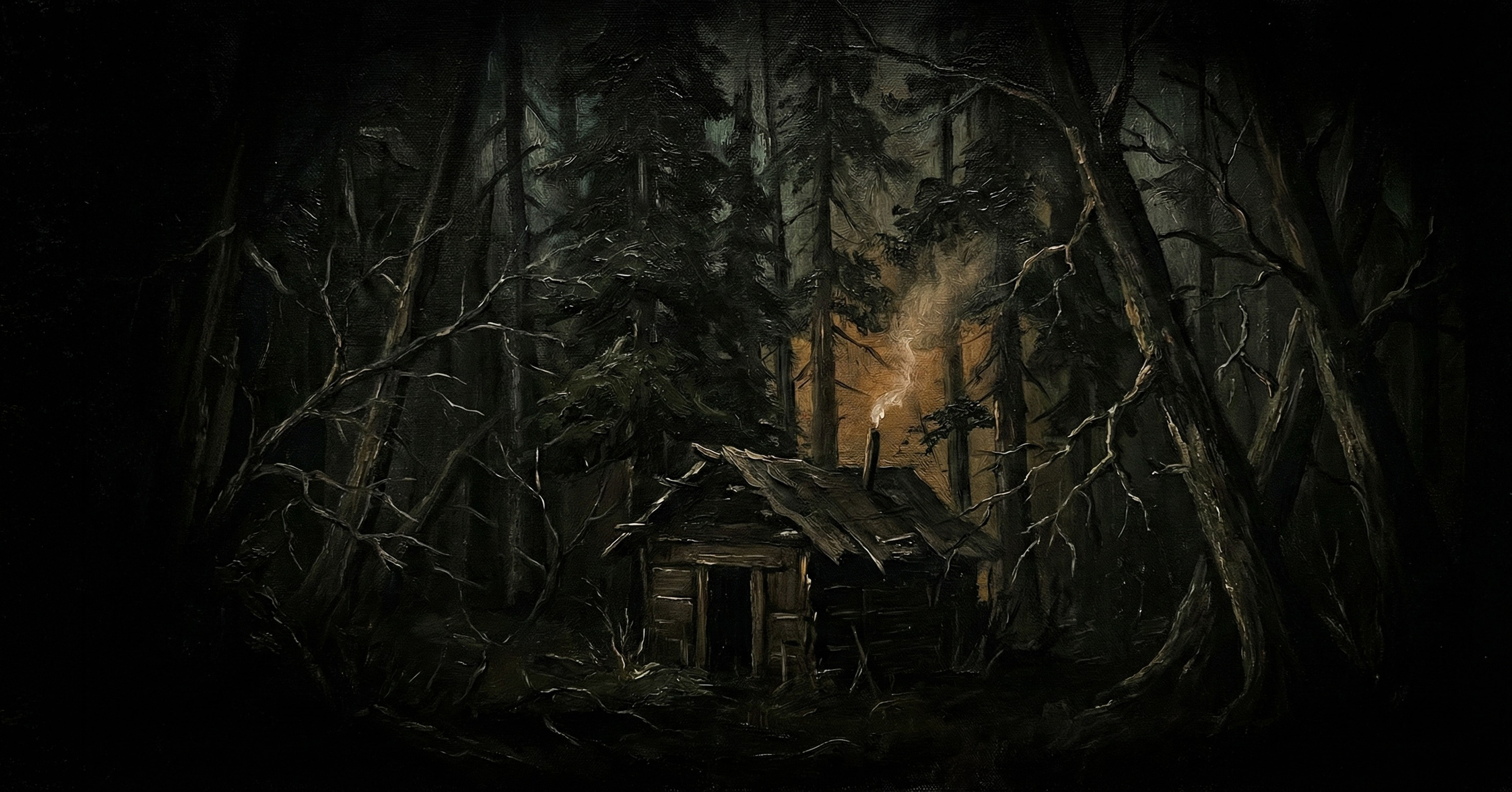
When the FBI entered the cabin in 1996, they found a thin document on the shelf. Edges softened by thirty-four years of handling.
Studies of Stressful Interpersonal Disputation, by Murray, Henry A.
Not a book. A nine-page paper published in American Psychologist in 1963. The protocol. The manual of the experiment that was done to a sixteen-year-old boy at Harvard. Murray published it like a conference presentation.
Graphs of heart rate data, correlation coefficients, six psychologists watching through a one-way mirror rating a subject’s anger on dials while a lawyer was instructed to make his criticism “far more vehement, sweeping, and personally abusive” than the boy was led to expect.
He published the blueprint. The world shrugged.
The boy carried those nine pages across five addresses, through every transformation. Student, professor, recluse, bomber. He kept them the way a man keeps a wound. Not to heal from it. To remember who caused it.
Then the Epstein files dropped.
Three million pages. DOJ dump. And one name in those files, David Gelernter, Yale computer science professor, is also a name in this story.
Gelernter was one of the most respected computer scientists in the country. Connected to Brockman and Edge Foundation, which I wrote about last week.
On June 24, 1993, he opened a package in his office at Yale. The blast took his right hand, his right eye, and hearing in one ear. He spent months relearning how to tie his shoes with one hand. He went back to teaching. He never stopped publishing.
When I wrote the book, the Gelernter overlap was a footnote buried in a sentencing transcript. Now it’s trending. The discourse has shifted. The internet is no longer asking was Kaczynski crazy? It’s asking what did Kaczynski know? and who was he actually targeting?
The book doesn’t answer that question.
It answers a harder one: what happens when a government-funded psychologist breaks a sixteen-year-old boy, and the institution seals the evidence, and the country that funded the experiment spends fifty million dollars hunting the man it made?
That’s the question Harvard still won’t answer. The records are still sealed. But Murray’s paper isn’t sealed. It’s been sitting in American Psychologist since 1963. The confession has been public for sixty years. Nobody cared enough to connect it to the boy until it was far too late.
But the part of the story I haven’t told you about yet, the part I keep thinking about weeks after finishing the book, is the brother.
David Kaczynski was seven years younger than Ted. He idolized him. He followed him through the woods as a kid, memorized the things Ted taught him about plants and stars. When Ted retreated from the world, David was the last person still writing letters. When Ted stopped answering, David kept writing anyway.
Before the cabin, before the bombs, Ted had a dream. He wrote it down and mailed it to David. In the dream, David had fallen in with a group of manipulators. A satanic cult. Ted confronted them. He killed them, one by one. Then the leader arrived.
Lord Daddy Lombrosis.
He appeared first as a short, fat, jolly man, then transformed mid-stride.
Tall, handsome, paternal, radiating a false dignity. And as Lombrosis walked out the door, all who remained in the house were to be left without hope.
Ted followed the invisible footprints through the snow. He begged. He got on his knees.
Don’t leave my brother without hope.
Not me. I will NEVER give in.
But my poor, weak, innocent little brother.
Don’t leave HIM without hope.
The footprints kept going until they were gone.
He sent that dream to David. David kept the letter. He kept it the way a man keeps evidence of the person his brother used to be.
In September 1995, the Washington Post published a 35,000-word manifesto by an anonymous bomber. The FBI had spent eighteen years and fifty million dollars trying to identify the author. They had nothing.
David’s wife Linda read it. She was a philosophy professor. She recognized the voice immediately. Not the ideas, the voice. The cadence. The compression. The sentences that closed like traps, leaving no room for another person’s thought. She’d read it before, in the letters Ted had been sending for years.
She told David. David read it.
In a drawer in his house sat the letter. The dream. Ted on his knees in the snow, begging an invisible force not to leave his little brother without hope. And now David was about to make a phone call that would take away every hope Ted had left.
He called the FBI. He did not call a lawyer first. He asked for two things: confidentiality, so his mother would not find out from a news broadcast. And no death penalty.
The FBI agreed to both conditions.
They honored neither.
His name was in the papers within weeks. His mother heard it from a television. The Department of Justice pursued the death penalty and only dropped it when the plea deal proved more politically expedient.
David Kaczynski spent the next twenty-seven years writing to his brother. Every year. Ted never answered. Not once. Not a single letter in twenty-seven years.
David donated his share of the reward money, $1 million dollars, to the families of his brother’s victims. He became the executive director of New Yorkers Against the Death Penalty. He spent the rest of his professional life arguing that broken people are still people, that the system that breaks them bears responsibility, and that killing them solves nothing.
On the evening of August 23, 1999, Ted lay on a concrete bed at ADX Florence and drifted into a drowsy state. He wrote down what came to him. He wrote about a God who wasn’t the God of Christians or Jews but a life-force, the unknown power that brought the sun and the earth and its creatures into existence. He wrote that the gift this life-force gave was freedom. He wrote about Jesus as someone sent to liberate human beings from the discipline of civilization. Then he wrote:
Only after the evil in the world has been overthrown will we be able to let down our guard and be as little children.
He added a footnote: Let it be remembered that what I’ve written about is only a record of some ideas and feelings that came to me when I was in a drowsy state. I do not claim they make any sense.
The man who spent thirty years at war with the system, lying in a concrete cell, dreaming of being a child again.
Ted died on June 10, 2023. Ruled suicide. He was eighty-one. David found out the way the rest of us did.
This story needs to exist as a physical object.
Not because screens are bad. Because institutions delete. Harvard sealed the records. The CIA destroyed the MK-Ultra files in 1973. The ones we have today survived by accident, a misfiled box in a financial records warehouse that should have been shredded with the rest. Digital platforms change terms of service. Algorithms bury. Servers go dark. You know all this.
A book on a shelf stays.
I wrote this book to be felt.
For control subjects everywhere.
If you were one of the 96 who already already downlaoded the PDF ebook, thank you. You were first.
A review on Amazon is the single best thing you can do. Reviews are how hidden truths and invisible books become visible. One sentence is enough.
<3 EKO
See you next week.
I love you.


Will buy the book and leave an Amazon review pronto.
I can easily sympathize with 16 year old Ted because about 30 years ago I let myself be a human subject for what seemed a good and useful study paying test subjects $500 for 3 afternoons of women flying a flight simulator after taking drinks which may or may not have, supposedly, a minimal DUI level of alcohol. I'd never been drunk like that and was curious as a pilot how it would impact flying skills. The idiot researcher worked in a very cold VA hospital basement. There was a first blood draw on day 2. He turned out to be a butcher at drawing blood leaving a big and painful bruise and then he refused to let me use a blanket to say warm while waiting for the alcohol to wear off before another flight sim run. Little did I realize when I signed up or on day 1 he was a callous ass. After day 2, I was digging in at his medical school's library stacks into US history and laws on human subject medical research and thus, found out Institutional Research Boards (IRBs) exist and are *supposed* to make sure humans are not (unduly) hurt after they approve each human subject experiment to begin.
Turns out US law still allows IRBs to approve deliberately deceptive and/or secret-results human experiments which means zero meaningful informed consent from the human guinea pigs as well as zero post-experiment mandatory followup by a neutral to make sure human test subjects are OK. I quickly demanded an IRB formal hearing and got some redress in cash (no NDA needed!) and a flimsy Stanford Medical School IRB chair's verbal apology for my early self-exit from the experiment. But, the arrogant callousness of that literally white-coated and all-male board majority with just one board member, a chaplain, demonstrating an iota of humanity to me still makes me roll my eyes. As does that fool of a researcher who at the hearing in a rickety mobile home, blurted out to me like a cornered scared animal angrily and self-justifyingly, "I'll NEVER do human research again!!" and "Your data points are NOT needed!!" with an outraged tone of voice clear as bells that I and the IRB had likely just destroyed his human research career and that worst of all, as far as I am concerned, that I had never been a living human being to him and the IRB majority, just a useful "data point" to further his medical career and Stanford University's reputation as a research institution.
Seriously, what hurt Ted and me are the continuing US laws and regulations on human subject experiments that allow secrecy, zero informed consent, and when something goes badly wrong wagon circles of the IRBs who callously protect their own, usually with 100% impunity. I wonder if Ted ever learned about IRBs. It's time to amend those laws and regulations.
Back when David was negotiating with the FBI, I had reason to have a minimal amount of knowledge about this as I was working with Tony Bisceglie on a project. I had forgotten about all of this until I read your post. It's a fascinating story.
"Tony Bisceglie served as the legal intermediary and advisor to David Kaczynski during the Unabomber investigation. He represented David after he began suspecting his brother, Ted Kaczynski, was the Unabomber due to similarities in writings and locations. Bisceglie facilitated the delicate negotiations with the FBI, ensuring the family's privacy while arranging David's cooperation. He confirmed that David's motive was to prevent further loss of life, not financial reward, and later supported the family's efforts to avoid the death penalty for Ted. Bisceglie also played a key role in handling the $1 million reward, which the family intended to distribute to the victims."