The Year Bob Dylan Saw Jesus
He spent three years trying to tell you. You called it a phase.
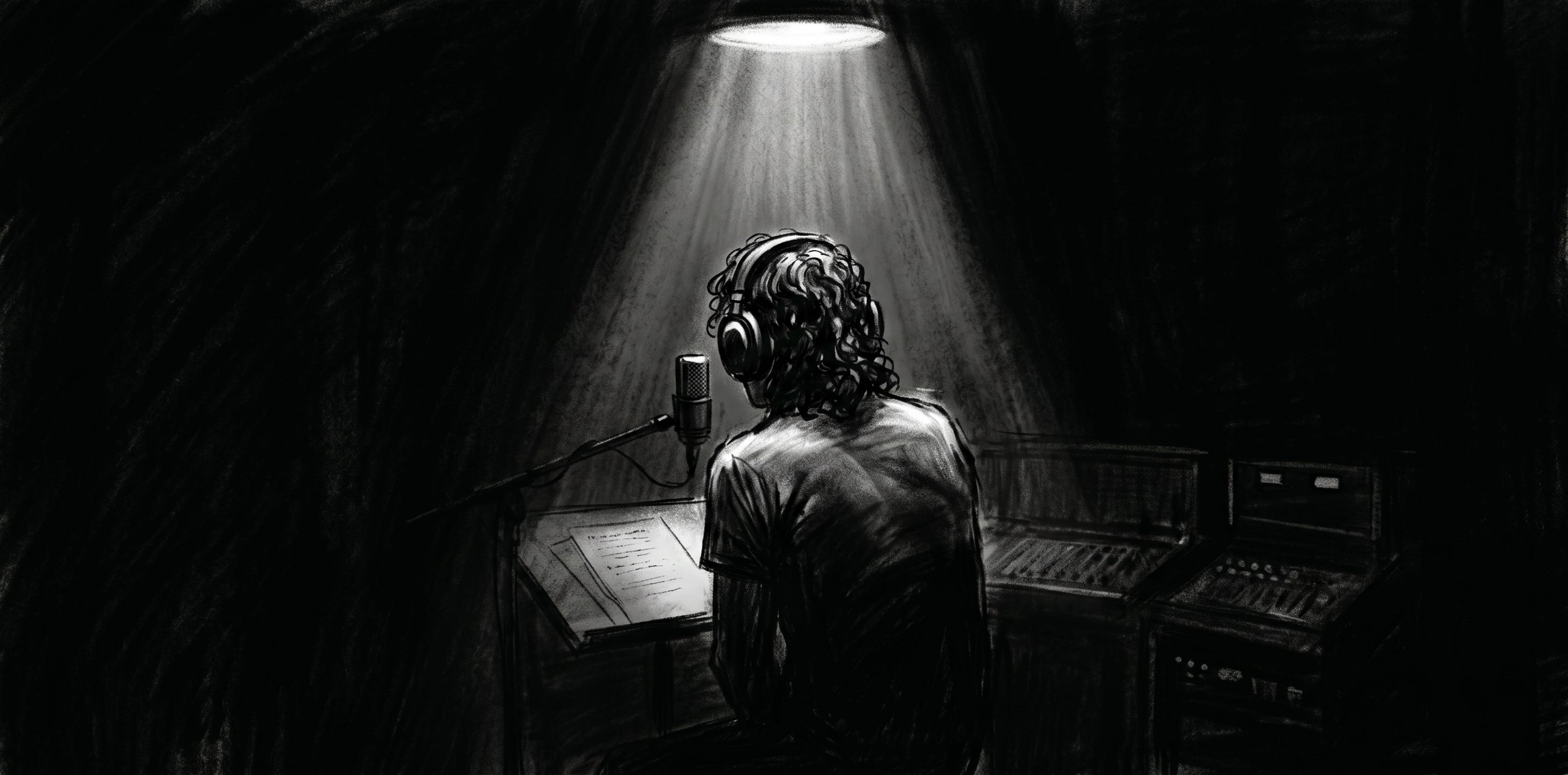
He was 37 years old and tired in a way that money does not fix.
He had been the voice of a generation he refused to be. He had walked off the folk stage and plugged in and been booed at Newport. He had been hit by a motorcycle in 1966 and disappeared from the public eye for eighteen months. He had come back and made a country album, then a strange album, then another strange album, and the people who had once called him a prophet had long since moved on to calling him cryptic.
He was on tour. November 1978. Tucson, Arizona. A hotel room.
Someone in the audience had thrown a small silver cross onto the stage during the show. He had picked it up and put it in his pocket without thinking. He was in the hotel room afterward, tired in the way that tour fatigue meets something older than tour fatigue, and he reached into his pocket and there it was.
He felt a presence in the room.
He would say later, when he could bring himself to say it, that the presence was not anyone he could mistake for anyone else.
“There was a presence in the room that could not have been anybody but Jesus.”
He was a Jewish man. Robert Zimmerman of Hibbing, Minnesota. Bar mitzvah’d, raised in the synagogue, the son of a furniture-store owner. He had not been looking for the figure who showed up in the room in Tucson. The figure had come to him.
He went looking for what to do with it.
He found a Bible study in Reseda, California, attached to the Vineyard Fellowship. He sat in classes for three months. He did not slip in and out. He went in the way the songs go, all the way down. The Vineyard pastors taught him verse by verse. He took notes. He asked questions like a man who needed answers, not a celebrity dabbling.
By the spring of 1979 he had finished the songs of the album that would become Slow Train Coming. The album landed in August. It was unmistakable from the first track. “Gotta Serve Somebody.”
A man saying flat out that you have two masters and the only question is which one. The song won him a Grammy. In February of 1980, in the middle of the gospel tour, he flew to Los Angeles and performed it at the awards in a tuxedo, and the room stood up.
The room stood up because the room rewards songs. The people who had built him into the voice of a generation were somewhere else. They had a Dylan they had assembled. They needed him cryptic.
He went back out.
For seven months, between November 1979 and May 1980, he played only the new songs. He refused to play “Blowin’ in the Wind.” He refused to play “The Times They Are a-Changin’.” He refused to play “Like a Rolling Stone.”
He stood on stages from San Francisco to Madison Square Garden in New York and played gospel songs to audiences who had paid to hear what they remembered. The audiences booed. Again. He let them boo. Again. And between songs, he preached. He told them what he had seen. He told them what time it was on the clock of the world.
He told them that they had a choice to make about a man who had a name.
People walked out. Others stayed and yelled at the stage. A few sat in their seats and wept. One night in Tempe, when the audience would not stop shouting for the old songs, he told them,
“If you wanna rock and roll, you can go and see KISS. This is a show about Jesus Christ.”
Then he kept playing. His band kept playing. His backup singers, three Black women with voices that could break glass, kept singing.
They sang Him as if He was in the room.
He recorded a second album the next year. Saved. Even more uncompromising. The cover painting showed a giant hand reaching down from heaven into a crowd of reaching hands. There was nothing cryptic about it. Saved by whom and from what. The record charted, then fell off, then disappeared from the conversation about him.
The third album, Shot of Love, came in 1981, and the seams of the Christian period started to show. Some songs were still gospel. Some songs were not. The man in the studio was working something out.
By 1983 he had recorded Infidels, and the songs were drawing from Hebrew sources again. The press wrote that he had returned to Judaism or left Christianity or given up his religious phase. The simplest readings were the loudest. The story most people heard was that Dylan had gone Christian and then gotten over it.
That is not what the man himself ever said.
He did not publicly renounce. He did not give the interview where he said it was a mistake. He went on for the rest of his life referencing Christ in his songs, his interviews, his Nobel speech. In 1989, on Oh Mercy, he recorded Ring Them Bells and laid gospel imagery over a piano in a quiet room:
“For the chosen few who will judge the many when the game is through.”
In 2004, on 60 Minutes, asked why he was still doing this after forty years, he said he had made a bargain a long time ago, and asked who with, he said, “with the Chief Commander on this earth and in the world we cannot see.”
The interpreters split on whether the Chief Commander was God or the devil.
The man himself has not clarified.
Bob Dylan never said he stopped seeing the man who came to him in the hotel room in Tucson. He said the rest of the world had stopped asking him about it. He kept walking. He kept writing songs that had Christ in them.
The Bible says Saul went blind on the road to Damascus and found his sight again three days later in Ananias’s house. The road to Damascus is famous because Paul became Paul.
The Tucson room is not famous because the audience booed.
He is still walking.
The lineage is older than the obituary written for the chapter he never closed.
Go and listen to Precious Angel tonight, then Every Grain of Sand from Shot of Love, and decide for yourself who the Chief Commander is. You knew before you read this piece. He confirmed it for you in 1979 and you were not paying attention because the radio said he had moved on.
He has not moved on.
<3EKO
Lineage is an ongoing series on the artists who saw what the rest of us spend our lives trying not to look at. Previous entries:
New this week: CAIN. The brother who survived the world’s first murder, and the mark that turned out to be a covenant. I’ll share more about that tomorrow.
I love you.


I knew a man that lead a Bible study that Bob Dylan attended. He once showed me a photo of the attendees - he pointed out a man & asked who I thought it was. I responded that he looked like Bob Dylan. My friend answered that it was. He attended regularly for quite a bit of time according to my friend.
I truly loved Bob Dylan and I remember when he “changed”…at first I laughed but when I became a believer….WOW. Amazing how opinions can change