The Man Who Laughed at the End of the World
He nearly lost his mind at twenty. He saw the camps coming twenty years early. We put him on a mug.
G.K. Chesterton spent the better part of his youth unsure the world outside his own skull was real.
He came out of it the funniest man of his age.
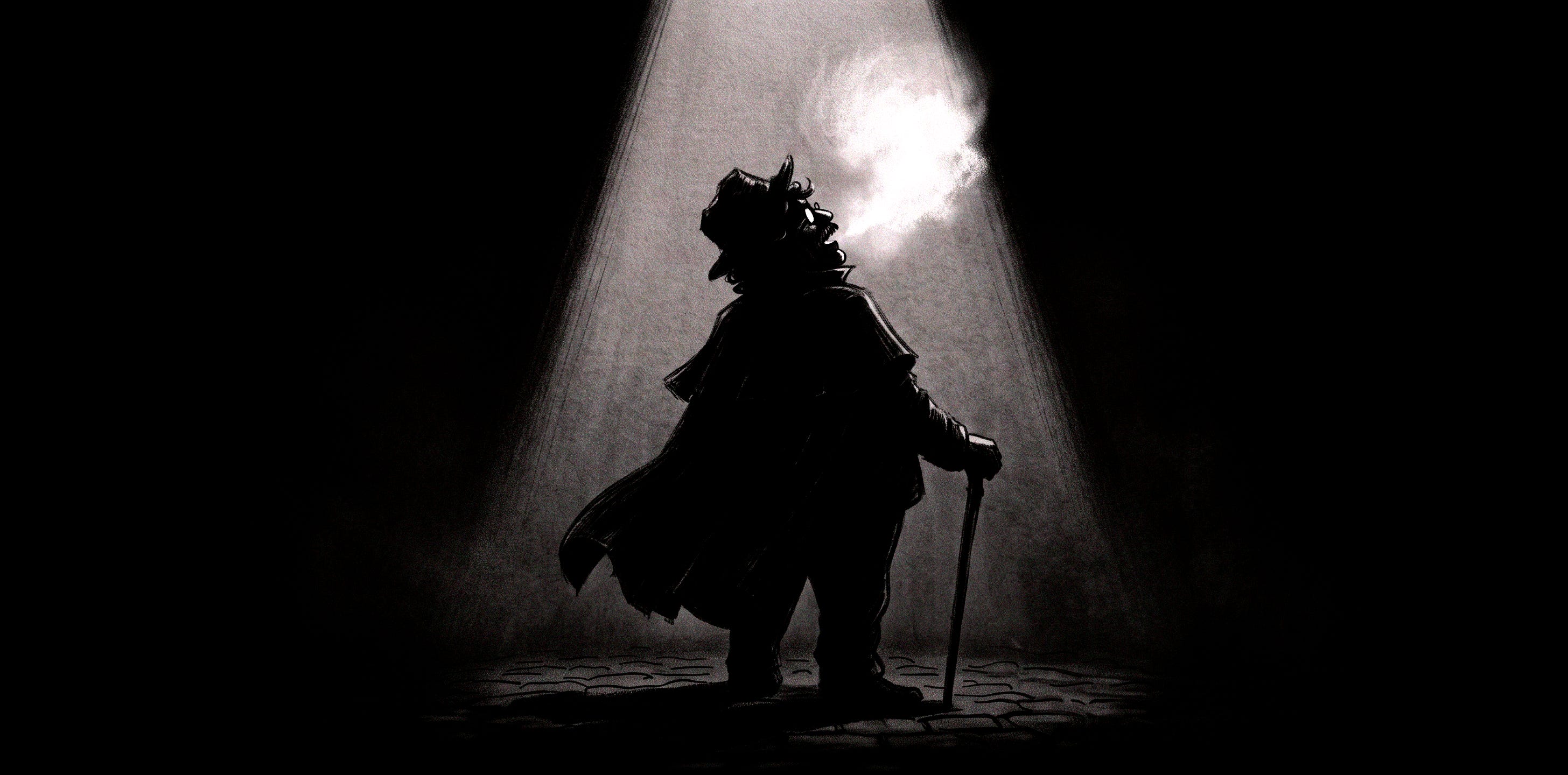
Three hundred pounds in a cape, moving through London with a swordstick, dictating essays on his feet because no chair could hold him. A hundred books. Thousands of columns. He would walk into a debate against the sharpest mind in England with no note in his pocket and walk out having won, and having made the room love the man he beat.
You have met the leftovers.
The quotable one-liners with his name stamped underneath and nothing behind them. The line about loving a thing by knowing it could be lost. The line about fairy tales and dragons. Several of them are making the rounds on my feed this week. Fine sentiments, gentle enough to needlepoint on a pillow.
He was not a gentle man.
He was a man who had been to the bottom of something and climbed back out talking, and he never once confused the bottom for a figure of speech.
It happened while he was studying art. Ouija boards in the evenings with his brother. The poets who taught that nothing was real and nothing was forbidden. He was at the age when a clever young man is most certain he has seen through everything, and he followed one idea further than the rest, the idea called solipsism, which says that perhaps you are the only thing that exists, that the whole world is a film thrown on the inside of your eye.
He looked at that idea until it looked back.
He said later that he had understood evil from the inside, not as a doctrine but as a place he had lived. Decades on, when he finally explained how his little priest detective solved murders, he handed over the method without apology: “I had murdered them all myself.” Father Brown catches killers by finding the whole crime already present in his own heart. The technique was memory.
He knew what it was to doubt whether the street was solid, whether his own family kept their faces when he turned away, whether he was even awake. The occupation does not come with horns. It comes as a whisper under the day, telling you nothing out there is real and no one is home.
Some men do not come back from that room. He came back, and he spent the rest of a loud and enormous life insisting, at the top of his voice, that the world was solid and worth dying for, that his own existence was a gift handed to him by someone who meant it, that sanity was not the ground you were born on but a country you had to cross a war to reach.
The joy people file under his name was never his weather. It was the sound a man makes when he has been held under and breaks the surface and cannot stop gasping about air.
When he tried to say what he actually believed, he found he had to build it from nothing, because he trusted nothing he had been handed.
He tells the story in Orthodoxy, written at thirty-four. He set out to construct a private philosophy, something a sane man could stand on. He decided life felt like a story, which meant someone was telling it. He noticed the world was glorious and also broken, which meant it had once been whole and something had cracked it. He found that he wanted to change the world and to love it exactly as it was in the very same breath, and that every philosophy on the shelf would sell him one of those, and only one creed on earth handed him both at the same counter.
He finished. He stood back to admire the strange new thing he had made with his own hands. It was the Apostles’ Creed. He had reinvented the Church by accident. He had labored for years over a revolutionary machine and looked up to find he had built a bicycle.
He said it felt like being an English sailor who pointed his ship at an undiscovered island, weathered every storm the sea had, and finally waded ashore onto the coast of England. He had found something wild and foreign. Then he saw where he was standing. He had been home the whole time with his back to the door, describing his own wallpaper as if it were another planet.
The same year Orthodoxy went to press, he published a nightmare. He called it that himself, on the title page. The Man Who Was Thursday.
A poet named Gabriel Syme is hired by Scotland Yard to infiltrate a council of anarchists, seven men code-named for the days of the week. He becomes Thursday. From there the book stops obeying the rules of a thriller. Every chapter takes something Syme was certain of and turns it inside out in his hands. His enemies keep peeling off their faces and turning out to be allies in disguise. The deeper he goes the less he can trust his own eyes, until he suspects that the whole visible world is a wall of masks, and that one enormous thing is standing behind every one of them at once, running both armies in a war he thought he understood.
He wrote it, he said, about the years when he was not sure anything existed, when he might be the only ghost inside the world. Read it knowing that and it stops being a mystery and becomes a dispatch from occupied ground. A man surrounded by masks, unable to tell friend from enemy, working out by degrees what the masks are hiding. The terror is the fear that there is nothing behind them. And the mercy, when it finally comes, is the discovery that there is. That the last face is not empty. That someone had been there the whole time, on both sides of the war, with his hand on everything, and the fear had been real but so had the hand.
He could not prove to you that the world is real and good. He could only testify that he had gone down into the doubt of it and come up the far side into daylight. Orthodoxy is the scar. Thursday is the wound with the knife still in it.
He also had a habit of being right decades early, which is a hard thing to forgive a man for.
He was warning about Germany in 1914, and not about the Kaiser. About the thing underneath the Kaiser. The worship of the State as a god. The teaching that strength is its own permission. The quiet swap of the living person for the faceless mass. He put it in print that first autumn, a small book called The Barbarism of Berlin, and named the disease a generation before the man with the small mustache turned it into policy.
He was warning about eugenics while eugenics was still the height of educated opinion, back when the brightest progressive minds agreed the human race ought to be improved by design and the unfit gently discouraged from being born. Shaw was for it. Wells was for it. Chesterton called it a horror while it was still fashionable, wrote an entire book to say so, Eugenics and Other Evils, 1922, and lived exactly long enough to watch it put on jackboots and build the camps.
He got the century right, in detail. The events, and the reasoning men would reach for to permit the unforgivable.
So here is the question the coffee mugs never ask. A man who had seen all of that, the whole occupation and the ovens waiting at the end of it, why in God’s name was he laughing?
His line is going around again this week, as it happens.
He wrote it in 1905, in a book called Heretics:
Once men sang together round a table in chorus, now one man sings alone, for the absurd reason that he can sing better.
If scientific civilization goes on (which is most improbable) only one man will laugh, because he can laugh better than the rest.
I read that as his self-portrait.
He feared something worse than the war or the camps: a civilization that lost the nerve to laugh together, that handed even its joy to the professionals and sat down to become an audience. And his own laughter, the laughter they printed on the mug, was his flat refusal to let that day arrive on his watch.
It was never the laughter of a man life went easy on. It was the laughter of a man who had stood in the empty room and doubted his own hands, who had read the whole century’s obituary before it died, and who looked at every bit of it and decided that joy was the one weapon the machine cannot swallow. You can arrest a serious man. You can answer an angry one. Nobody has ever known what to do with a fat man laughing in the street who has already seen the worst you have and is not afraid of it.
They kept the chuckle and lost the war it was won in. They quote him on dragons and leave out that he believed in a real one, with a will and a long patience, the one he had met at twenty and watched forever after. They quote him on the lightness of angels and cut the line where he says pride is the oldest ruin on earth and the modern world is drunk to the eyes on it.
They made him safe because he was the opposite of safe. A man who tells you the world is occupied, and that the sane response to occupied ground is to throw a party, is not saying anything comfortable. He is saying something that sounds insane, right up to the morning you recognize the occupied ground as your own street.
And one more prophecy, the quietest one. In 1925 he published The Everlasting Man, the whole history of the world with Christ standing at the hinge of it. A young Oxford atheist picked it up when it was new, expecting to enjoy the prose and dodge the argument. He wrote later, in the book about his surrender: “A young man who wishes to remain a sound Atheist cannot be too careful of his reading.”
The atheist was C.S. Lewis.
MacDonald baptized his imagination.
Chesterton baptized his intellect.
Everything Lewis built, the wardrobe, the lion, the fifty million readers, stands on the shoulders of the fat man with the swordstick.
The lineage runs through him.
It ran through me before I could name it. I came to him backward, upstream, reading MacDonald and then Lewis and watching this one name surface in both of them until it stopped being a coincidence. I knew the quotes. Everyone knows the quotes. I had never opened a single book, and the two writers I trusted most had been pointing at him the whole time.
So go and find the man they hid behind the mug.
Start with Orthodoxy. Ninety pages, and it reads like the best walk of your life beside the most alive person you have ever met, who somehow leaves you feeling sharper instead of small. Fight him as you go. He would count that as friendship.
Then The Man Who Was Thursday, with nobody’s summary in your head. Walk into the masks yourself and find out what the last one is hiding. Keep the Father Brown stories on the nightstand for after, one at a time, and watch a short round priest with an umbrella keep cutting sideways through a locked room and into the locked room of your own chest.
And when those are done there are a hundred more on the shelf, most still in print, almost none of them opened. The lives of two medieval saints that are really theology wearing a borrowed coat. The history of the world that ambushed Lewis.
Tonight the line will go around again. Somewhere a man is saving it to his phone in the dark, one face lit blue in a silent room, ten thousand people sitting quiet while one account laughs better than the rest. The room Chesterton warned about is in his hand. He reads the line twice and puts the phone down.
The rest of the man who wrote it is on a shelf nearby, still in print, still unopened, still laughing. Pick him up. You find out fast that the laugh was the hardest thing in the book.
<3 EKO
The man wrote 100 books and thousands of columns. If I keep up my current pace, I’m on my way to the same numbers, and all of it stays free.
And you can always fuel the mission.
Thank you for reading.
I love you.
Lineage follows the artists who refused to look away. Previous entries:


Two excellent books by one excellent author. And two other authors well worth reading for good measure. Now I need to go back and reread them both.
"the better part of his youth unsure the world outside his own skull was real"
What? This isn't normal? It's felt like that since I was about 11. You mean the feeling goes away? When? Ever?